Via delle Bocchette: My Brenta Dolomites 5 day Hut-To-Hut Via Ferrata Adventure (Trip report)
The most breathtaking hut-to-hut via ferrata route in Europe — and the trip that changed how I see the mountains.
🌄 The Start — Nervous Energy in Madonna di Campiglio
When I arrived in Madonna di Campiglio, the peaks were hidden behind clouds, and I started to question what I’d signed up for. I’d seen pictures of the Via delle Bocchette — narrow ledges carved into vertical walls, exposed ladders clinging to cliffs — but standing at the base of the Grostè cable car, the idea of actually crossing those ridges felt unreal.
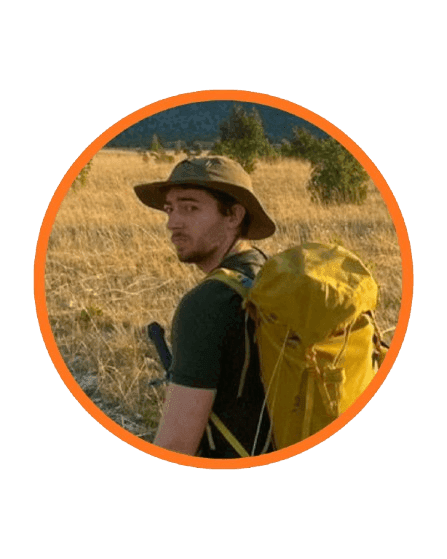
I packed my harness, helmet, and gear into my 30L pack (the same setup I had shown in my short video series) and stepped into the cable car, heart pounding. As the cable car climbed above the tree line, the world below disappeared. Ahead, those famous Dolomite’s jagged limestone towers broke through the mist. That’s when it hit me: this is it.
🥾 Day 1 — From Grostè to Tuckett
The first stretch is supposed to be “easy,” but with 10 kilos on your back, it quickly reminds you that you’re in real mountains. The trail follows the Sentiero Benini (now closed due to a rockslide), our first via Ferrata of this trip (which was closed due to rockfall, so take the alternate path toward Rifugio Tuckett). The exposure takes some getting used to, in Switzerland or Austria you feel very secure on Via Ferrata’s. In Italy this is not the case, you will be hiking and scrambling next to 500m drops without any protection. Not to difficult but quite a mental barrier that takes some getting used to.
After completing the Via Ferrata we also had to cross a couple of smaller snow patches, we did this tour at the end of September when normally these have already melted. This is when we got our first hint of how unprepared we were, we crossed them with falling (although we did slip a fair amount of times).
We reached the hut by early afternoon, legs burning but smiling. The view from the terrace, cliffs glowing gold in the afternoon light made every step worth it. Inside, the hut smelled like pasta and mountain sweat. Everyone had the same mix of exhaustion and quiet happiness. This night was also the worst night of sleep I had on the entire trip, sleeping at altitude takes some getting used to.
⛓️ Day 2 — The Bocchette Alte and the First Ladders
This was the day the adventure really started. The Bocchette Alte, the hardest and highest ferrata in the Brenta, connects Rifugio Tuckett to Rifugio Alimonta — short on paper, but full of ladders, exposed traverses, and polished rock that forces you to trust your boots.
Here we encountered our first major obstacle a steep and vertical Glacier, that I unfortunately did not encounter in my research; I’d read that crampons were optional this late in the season. Due to a major rock slide a few years ago, this was no longer the case. We had 2 options: try to cross with just the traction of our boots; or opt for a detour that would add 2 hours to our day.
Lucky for us we explored the hut last night and found their gear section, this somehow still had 2 pairs of micro spikes left. This would give us a fighting chance; micro spikes are not ideal for glacier travel, but can be sufficient if the terrain steepness is manageable and the ice is soft. We hiked up to the foot of the glacier, put on our micro spikes, did a last prayer and carefully starting ascending the glacier using the steps neatly created in the ice. When we reached the end we couldn’t believe we just did our first glacier crossing.
After finally reaching the first cables at nearly, the terrain changed completely: narrow ledges, steel rungs, and massive drops into the Brenta valleys. Every clip of the carabiner echoed like a heartbeat.
We pushed through 4 brutal hours before finally reaching Rifugio Alimonta (2,580 m) — exhausted, sunburnt, and completely hooked on the adventure. Here we were hunting for any phone signal that could reach us, just like many other hikers. We ended up giving up and enjoyed our dinner, while chatting with our German roomies. I somehow slept like a baby here, I guess exhaustion and lack of sleep will do that to you.
🧗♂️ Day 3 — Bocchette Centrali: The Classic Traverse
This is the section that makes the Brenta Dolomites famous — and honestly, no photo can prepare you for it. The Bocchette Centrali follows ledges cut into vertical limestone walls. At some points, the trail is no wider than a boot. You clip in, take a breath, and focus only on the next step.
There’s a tunnel carved straight through the rock — cool air and silence inside — before stepping back out into a wall of light and space. You feel suspended between heaven and earth, the valley thousands of meters below.
I filmed parts of this for my TikTok series, and every time I look back, I still can’t believe how unreal it was.
After hours of traversing, we reached Rifugio Pedrotti, surrounded by jagged spires. But this was not our destination for today, due to renovations this hut was closed. We had another big push left, a massive uphill followed by down climbing our last Via Ferrata for the day Brentari. This section itself was not complicated but somehow we were the only people on this route; contrary to our earlier days were we were constantly passing people.
Once we reached the end of the via ferrata we had one last challenge a Glacier crossing. Since it was mostly covered with rocks it was quite easy, but that did not mean finding the route was. There are no marking since they would get wiped out by the frequent rocks slides anyway. The valley was also covered in thick fog, not ideal when walking the wrong way can potentially mean falling in crevasses or down a 600m cliff. We used our GPS and through the clouds we could see the red roof of our hut for tonight Agostini.
We were exhausted from our hardest day yet, we didn’t even shower. Lucky for us our next day we would only encounter one more group, who unfortunately for them had to endure our smell.
🏞️ Day 4 — Ettore Castiglioni, Sentiero Attrezzato dell’Ideale, and Sentiero Alpino Martinazzi to Brentei
What started as a normal alpine morning turned into one of the wildest days of the entire Brenta traverse — a true mix of adrenaline, confusion, and survival instinct.
We left Rifugio Agostini under a low ceiling of clouds, planning to link three via ferratas in one push: Ettore Castiglioni, Sentiero Attrezzato dell’Ideale, and Sentiero Alpino Martinazzi.
The first climb went smoothly — steep ladders, cold rock, and that satisfying rhythm of metal on metal. But as soon as we topped out around 2,859 m, the world disappeared into fog.
Visibility dropped to a few meters. The trail markers vanished. Then came the snowfield, the Vedretta dei Camosci glacier an expanse of ice and scree where every step felt like guesswork. Our GPS track was useless, and we soon realized we were walking a fine line between two routes: one continuing safely ahead, the other (as we’d later learn) leading straight to a 600-meter cliff.
Somewhere in the distance, the rumble of rotors broke through the fog — a rescue helicopter circling above the glacier. It was a chilling reminder of how quickly things can go wrong up here. We paused, re-checked our map, and moved carefully across the ice, each footstep deliberate.
Hours later, soaked, hungry, and mentally fried, we stumbled onto the final section of the day — the Via Ferrata Sentiero Alpino Martinazzi. Even though it’s rated “B,” with exhaustion it felt like a grade harder.
When the Rifugio Brentei finally appeared through the mist, the feeling was indescribable; relief, pride, and disbelief that we’d actually made it. We dropped our packs, ordered the biggest plate of pasta available, and just stared at each other in silence.
🧗♀️ Day 5 — SOSAT to Grostè
By Day 5, my body had fully accepted that “comfort” was a forgotten concept. My legs burned, my hands were raw, and my clothes permanently smelled of wet limestone. Still, I told myself one thing while leaving Rifugio Brentei (2,175 m):
“Future-me will say this was amazing.”
The plan was simple — follow the Via Ferrata SOSAT back toward Rifugio Tuckett, then climb up to the Grostè top station (2,504 m) to end the traverse. The reality? Absolute chaos.
The exposure started immediately; vertical ladders swaying in the wind, gusts strong enough to throw dust into your eyes, and clouds wrapping the whole mountain in white. Fog became the “nice” weather.
Halfway through the SOSAT we crawled through narrow rock tunnels, clipped into cables that disappeared into the mist, and climbed slick iron rungs while the wind screamed through the couloirs. Just as we finished the last rope section, the sky exploded. Thunder. Hail. Sideways rain.
We stumbled into Rifugio Tuckett (2,272 m) drenched, freezing, and laughing out of pure disbelief. Soup saved us — the kind of hot vegetable broth that feels like it could resurrect the dead. Rain hammered on the windows, but after a bowl (or three), everything felt fine again.
The final push to Grostè top station was quiet — soaked jackets, fogged-up glasses, and that eerie calm that only comes after a storm. When we finally boarded the cable car, we cheered… until it stopped. Mid-air. Suspended over the valley. Because of course it did.
Hanging there, watching clouds drift past at eye-level, I realized this was the perfect ending — chaotic, exhausting, and absolutely unforgettable.
🎒 Ready to Plan Your Own Brenta Adventure?
Before you clip in on your first ladder, make sure you’re properly packed.
Grab my FREE printable Brenta Dolomites Packing List — the exact checklist I used on this route.
👉 Get the Free Packing List + Early Guide Access
You’ve seen what the Brenta is really like — the exposure, the ladders, the huts, the views that make you forget how tired you are.
If you’re even thinking about doing this trip yourself, don’t wing it.
The Brenta Via Ferrata Guide breaks down the exact route we took, huts to book, gear you actually need (and what you don’t), escape options, and the mistakes you really don’t want to learn the hard way.
👉 Get the guide and start planning your own Brenta adventure.